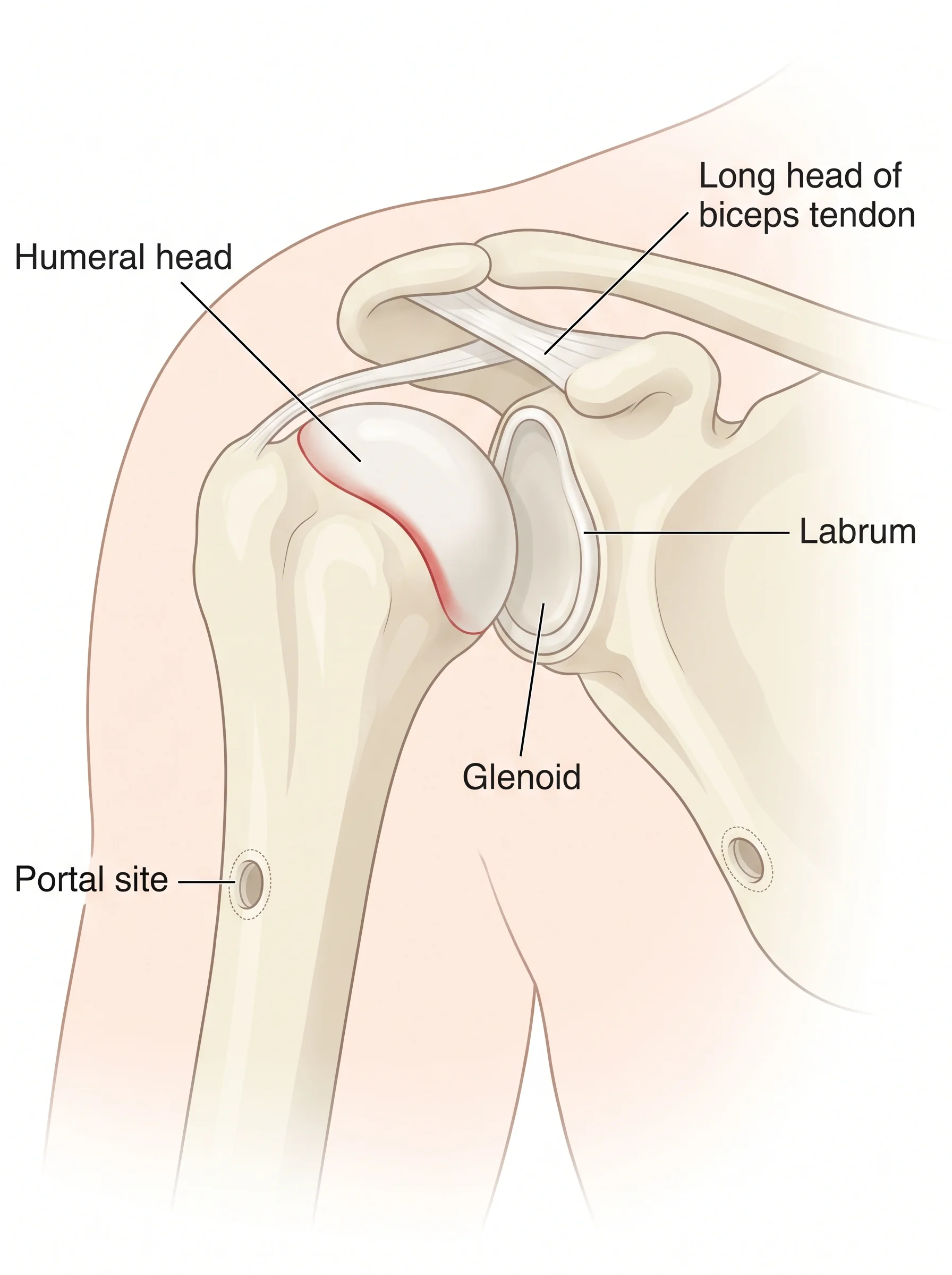
Shoulder instability is a shoulder that slips partly or fully out of its socket. Dr. McMillan treats shoulder instability and dislocation in Burlington Township, beginning with therapy to strengthen the joint and offering surgical options when the shoulder keeps giving way despite non-surgical care.
Sean McMillan diagnoses and treats shoulder instability and dislocation in Burlington Township, from the first visit through recovery.
What is Shoulder Instability / Dislocation?
The shoulder is a ball-and-socket joint, and the socket is shallow, which gives the shoulder wide motion but also makes it prone to dislocation.
Instability means the ball moves too far within or out of the socket. A full dislocation is when the ball comes all the way out; a partial slip that goes back on its own is called a subluxation.
Instability often starts with a first dislocation from a fall or a sports collision. That first event can stretch or tear the soft tissues that normally hold the joint in place, which makes later slips more likely. Some people have naturally loose ligaments, the bands that connect bone to bone, and develop instability without a single injury.
Signs include the shoulder feeling loose or like it may give way, repeated slipping with certain arm positions, pain, and a sense of apprehension when the arm is raised and rotated outward.
How is Shoulder Instability / Dislocation diagnosed, and what does the visit involve?
Shoulder instability is diagnosed with a history, an exam, and imaging.
Dr. McMillan will ask how the shoulder first slipped and in what positions it happens now, then test how far the joint moves and check for apprehension when the arm is placed in the at-risk position. X-rays show the bones and reveal a dislocation or fracture. An MRI or a specialized MRI with contrast, called an MR arthrogram, shows tears in the labrum, the rim of cartilage that deepens the socket, and in the ligaments. A CT scan is used when bone loss needs to be measured. These findings guide whether therapy alone or a stabilization procedure fits.
What can I expect over time?
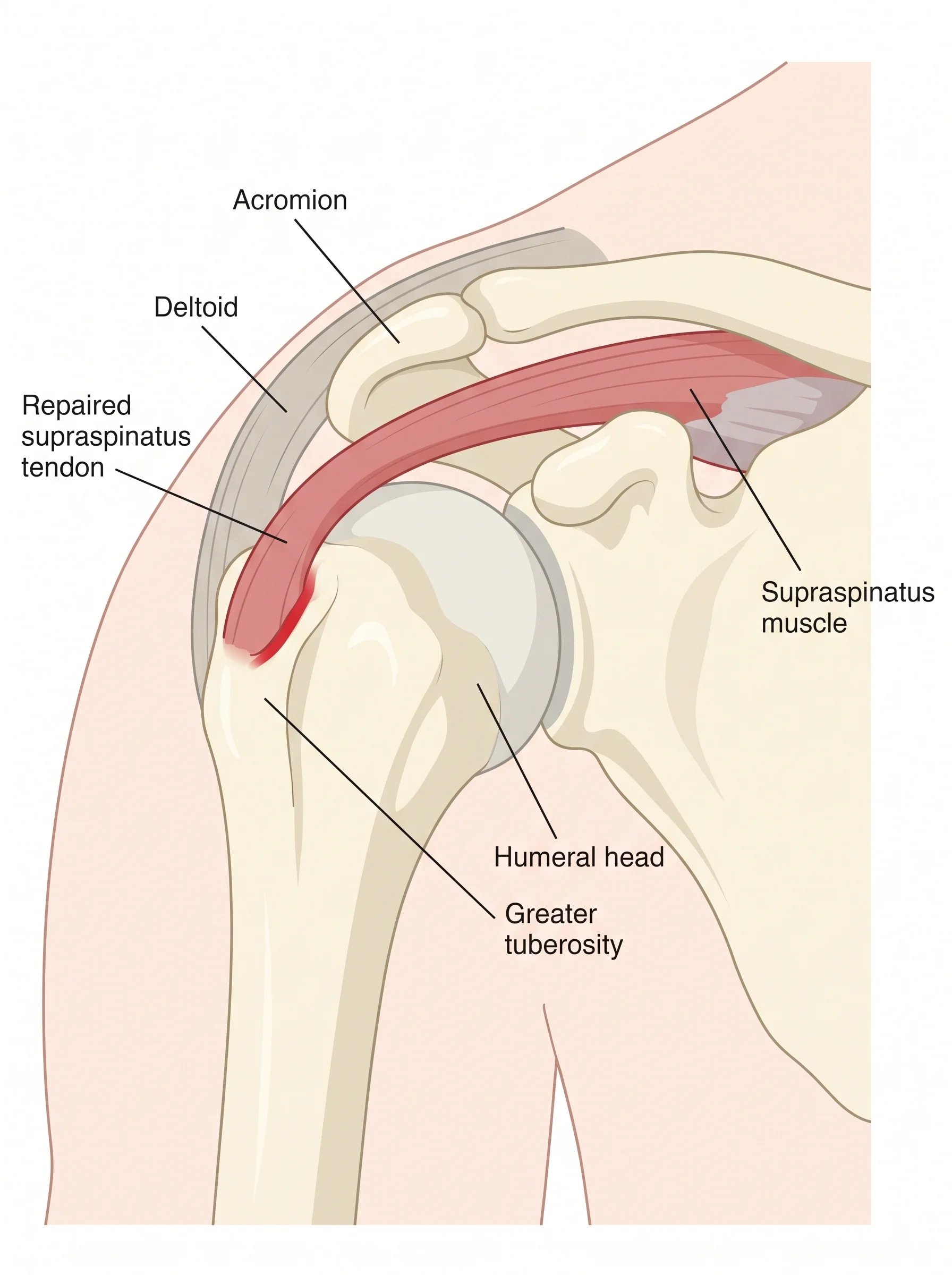
After a first dislocation, many shoulders settle and grow steadier as the muscles around the joint are strengthened through the therapy described above.
Some shoulders keep slipping, particularly in younger, active people, so the natural course varies from person to person. It helps to check back with Dr. McMillan if the shoulder keeps giving way, slips again, or feels unstable during everyday activities, since repeated slips may point toward a stabilization procedure.
What are the treatment options?
- 01A short period of rest and, after a dislocation, help returning the joint to place by a clA short period of rest and, after a dislocation, help returning the joint to place by a clinician.
- 02Physical therapy to strengthen the rotator cuff and shoulder-blade muscles that stabilizePhysical therapy to strengthen the rotator cuff and shoulder-blade muscles that stabilize the joint.
- 03Activity changes to avoid positions that trigger slipping while strength is rebuiltActivity changes to avoid positions that trigger slipping while strength is rebuilt.
- 04Surgical stabilization, which repairs or tightens the torn tissue, considered for repeatedSurgical stabilization, which repairs or tightens the torn tissue, considered for repeated dislocations, younger active patients, or bone loss that makes the joint unstable.
Education and training
Medical school at Philadelphia College of Osteopathic Medicine, Philadelphia, PA. Residency at Peninsula Hospital Consortium- North Shore Long Island Jewish Health Systems, Long Island, NY. Fellowship at University of Massachusetts, Worcester, MA.
- FellowshipUniversity of Massachusetts, Worcester, MAArthroscopic Sports Medicine: Shoulders, Hips, Knees and Elbows
- ResidencyPeninsula Hospital Consortium- North Shore Long Island Jewish Health Systems, Long Island, NYOrthopedic Surgery
- Medical schoolPhiladelphia College of Osteopathic Medicine, Philadelphia, PADO
- Board statusAmerican Board of Orthopaedic SurgeryBoard certified
What do patients ask most?
Will my shoulder keep dislocating?+
Do I need surgery after a shoulder dislocation?+
What is the difference between a dislocation and a subluxation?+
How long does recovery take after shoulder stabilization surgery?+
Dr. Sean McMillan Orthopedics & Sports Medicine
Burlington Office
2103 Burlington-Mount Holly Road
Burlington Township, NJ 08016
Phone(609) 747-9200
Dr. Sean McMillan Orthopedics & Sports Medicine
Cherry Hill Office
325 NJ-70
Cherry Hill Township, NJ 08034
Phone(609) 747-9200
Dr. Sean McMillan Orthopedics & Sports Medicine
Centennial Surgery Center
502 Centennial Blvd
Voorhees Township, NJ 08043
Phone(609) 747-9200
Dr. Sean McMillan Orthopedics & Sports Medicine
Mount Holly Hospital
175 Madison Ave
Mt Holly, NJ 08060
Phone(609) 747-9200
Dr. Sean McMillan Orthopedics & Sports Medicine
South Jersey Surgical Center
130 Gaither Dr #160
Mt Laurel Township, NJ 08054
Phone(609) 747-9200
Dr. Sean McMillan Orthopedics & Sports Medicine
Professional Orthopaedics - Sports Medicine & Arthroscopy
2103 Burlington-Mount Holly Rd
Burlington, NJ 08016
Phone(609) 747-9200
Fellowship trained at University of Massachusetts, Worcester, MA (Arthroscopic Sports Medicine: Shoulders, Hips, Knees and Elbows). Sees patients in Burlington Township.
About Dr. McMillan →